Testing status: this guide is written from manufacturer specifications, published sizing data and general fit principles. It is not a claim of long-term wear testing by our team.
One Scale, Three Numbers
Birchbury sells a single unisex size run, so every size carries three labels: US men, EU, and the US women equivalent. This causes most of the confusion people report, because a US women's 9.5 and a US men's 8 are the same shoe.
| US Men | US Women | EU | Foot length (cm) |
|---|---|---|---|
| 5 | 6.5 | 37 | up to 23.6 |
| 6 | 7.5 | 38 | 23.6 – 24.3 |
| 7 | 8.5 | 39 | 24.3 – 24.9 |
| 8 | 9.5 | 40 | 24.9 – 25.6 |
| 9 | 10.5 | 41 | 25.6 – 26.3 |
| 10 | 11.5 | 42 | 26.3 – 26.9 |
| 11 | 12.5 | 43 | 26.9 – 27.6 |
| 11.5 | 13.5 | 44 | 27.6 – 28.2 |
| 12 | 14.5 | 45 | 28.2 – 28.9 |
| 13 | 15.5 | 46 | 28.9 – 29.6 |
| 14 | 16.5 | 47 | 29.6 – 30.2 |
| 15 | 17.5 | 48 | 30.2 – 30.9 |
| 16 | 18.5 | 49 | 30.9 – 31.6 |
Foot-length figures are taken from Birchbury’s own printerless sizing chart at the time of writing. Always confirm against the current product page before ordering — merchants revise charts.
Measuring Properly Takes Two Minutes
1. Do it late in the day
Feet are at their largest in the afternoon and evening. A morning measurement understates what you need for a full working day.
2. Stand on paper, weight through the foot
Put a sheet of paper against a wall, heel touching the wall, and stand up properly. The foot lengthens when loaded — measuring while seated gives a short reading.
3. Mark the longest toe, not the big toe
For a lot of people the second toe is longest. Mark whichever one reaches furthest and measure heel to that mark in centimetres.
4. Measure both feet
Asymmetry is normal. Use the larger figure.
5. Compare to the chart, not to your other shoes
"I am a 10 in Nike" is not a measurement. Different brands use different lasts; the number on your current shoe is not transferable.
Checking the Shoe Once It Arrives
| Check | How | What is wrong if it fails |
|---|---|---|
| Toe clearance | Stand up, press gently at the front | Too short — go up, do not squeeze in |
| Ball position | Widest part of foot at widest part of shoe | Wrong length, not wrong width |
| Heel hold | Walk and use stairs indoors | Too long if the heel lifts out |
| Instep pressure | Elastic laces at normal tension | Too tight or wrong volume for your foot |
| Sock reality | Test with your actual socks | Fit changes materially with sock thickness |
| Afternoon test | Wear indoors late in the day | Morning-only fit means it is too small |
IF YOU USE ORTHOTICS
Fitting Prescribed Insoles
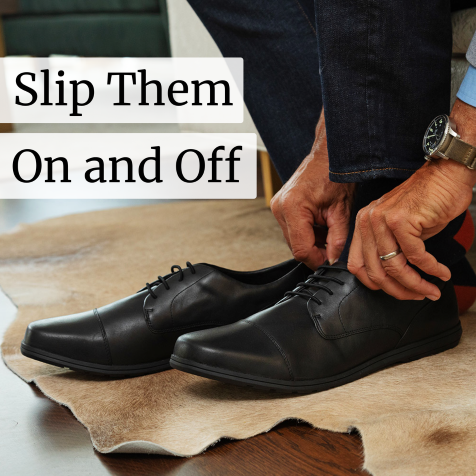
All three models have a removable insole, which is what makes custom orthotics possible.
Remove the stock insole first
Stacking an orthotic on top of the original insole reduces internal depth and usually causes pressure over the toes.
Watch for heel raise
An orthotic with a built-in heel lift partly cancels the zero-drop platform. That may be exactly what your clinician intended, or not — ask.
Recheck length after fitting
A thicker orthotic can change how the foot sits and reduce toe clearance. Repeat the standing check with it in place.
Trim carefully or not at all
Cutting a prescribed orthotic to fit changes a device someone specified for you. Check first.
Ankle and knee feedback
New shoes and orthotics together are two variables at once. Introduce them gradually so you can tell which is doing what.
Ask before you buy
If your orthotic is bulky, confirm the volume works before ordering rather than after the return window closes.
This is general footwear information, not medical advice. Persistent pain, numbness, swelling or skin changes should be assessed by a qualified clinician — especially for anyone with diabetes, neuropathy or circulation problems.
SHORT VERSION
The Rules That Matter
- One unisex scale — women's labelling is about 1.5 sizes above men's
- Measure in centimetres, standing, late in the day
- Fit the larger foot; adjust the other with socks
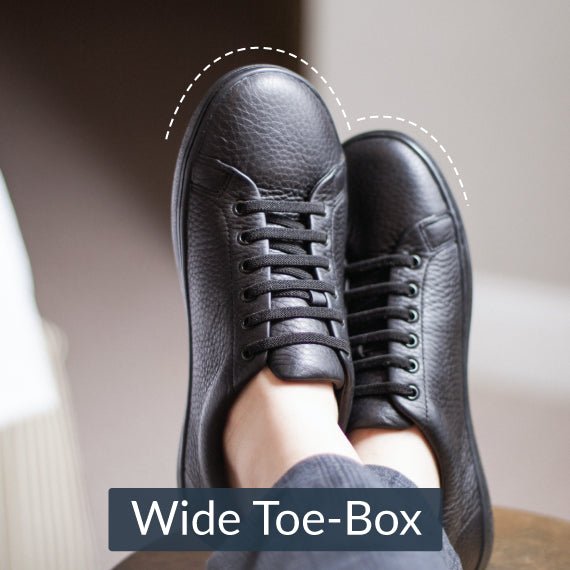
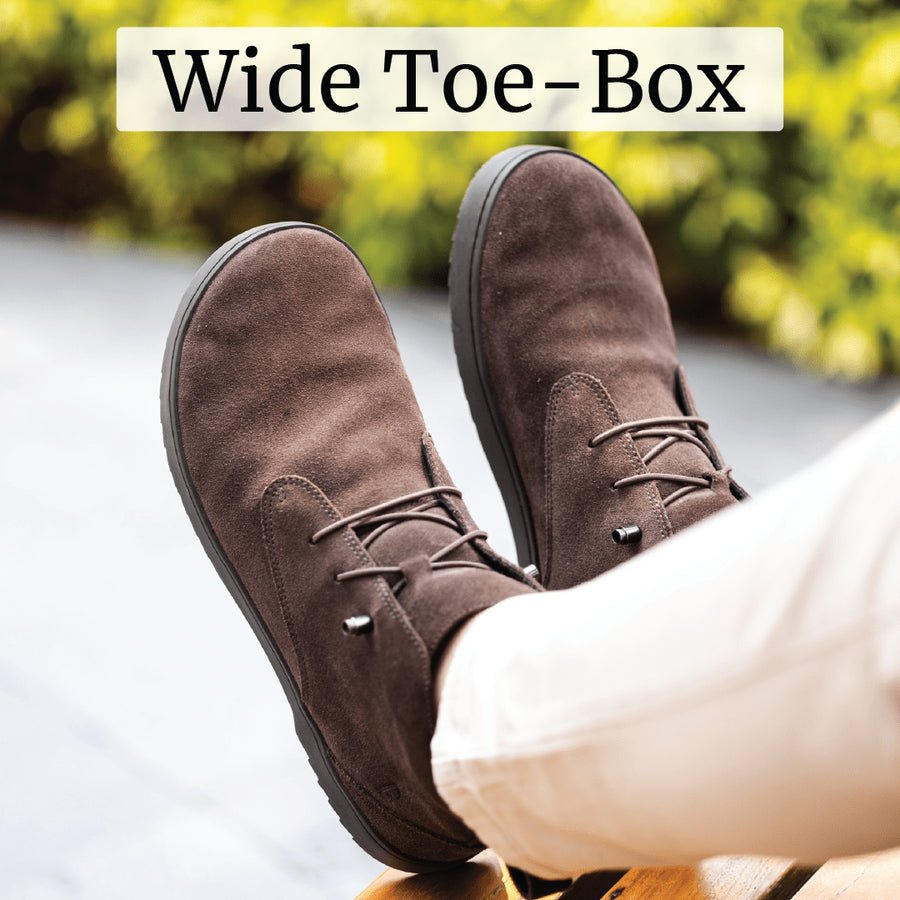
- Wide toe box adds shape, not length — do not size up automatically
- Remove the stock insole before fitting prescribed orthotics
- Confirm the current chart and returns policy on the product page before ordering
Frequently Asked Questions
Should I size up or down in Birchbury?
Neither by default. The extra room is in the shape of the forefoot, not in the length. Measure your foot in centimetres and match it to the merchant's published chart rather than converting from another brand's fit.
Why does the label show three numbers?
Birchbury runs one unisex scale, so each size is labelled with a US men's figure, an EU figure and a US women's equivalent. US women's is roughly 1.5 sizes above the US men's number on the same shoe.
What if my feet are two different sizes?
Fit the larger foot and take up the slack on the smaller side with a slightly thicker sock or by lacing more firmly. Sizing down to suit the smaller foot creates the exact compression you are trying to avoid.
How much toe clearance should there be?
Enough that the longest toe does not touch the front while you are standing, with the shoe on the foot and weight through it. Check standing, not sitting — the foot lengthens under load.
Checking the Brenston?
Size charts and stock change. Check the current chart on the product page before ordering.
View Brenston at BirchburyWe may earn a commission if you buy through this link. Price shown was $180 at the time of writing and can change.