Testing status: this guide is written from manufacturer specifications, published sizing data and general fit principles. It is not a claim of long-term wear testing by our team.
The Pattern Almost Everyone Describes
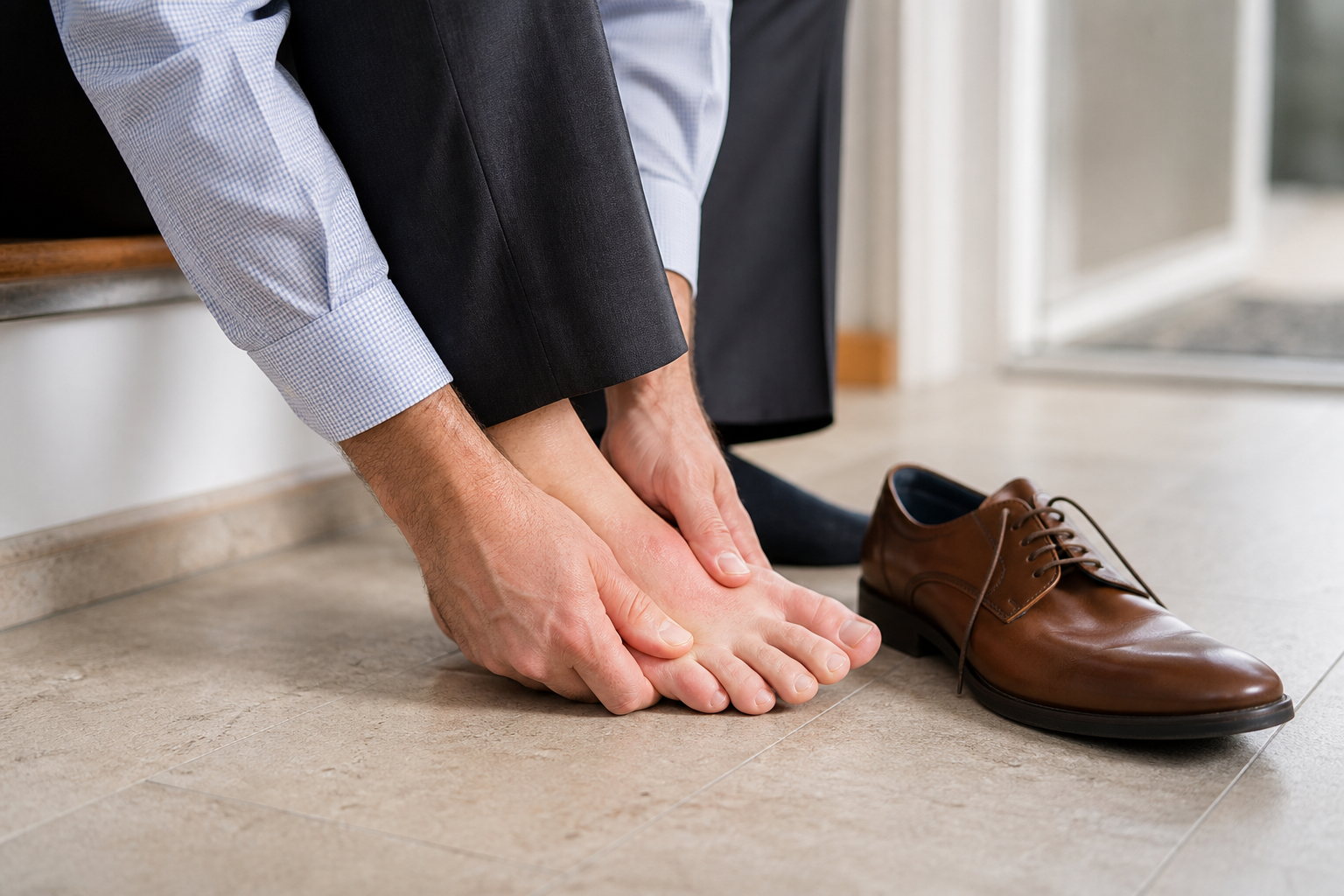
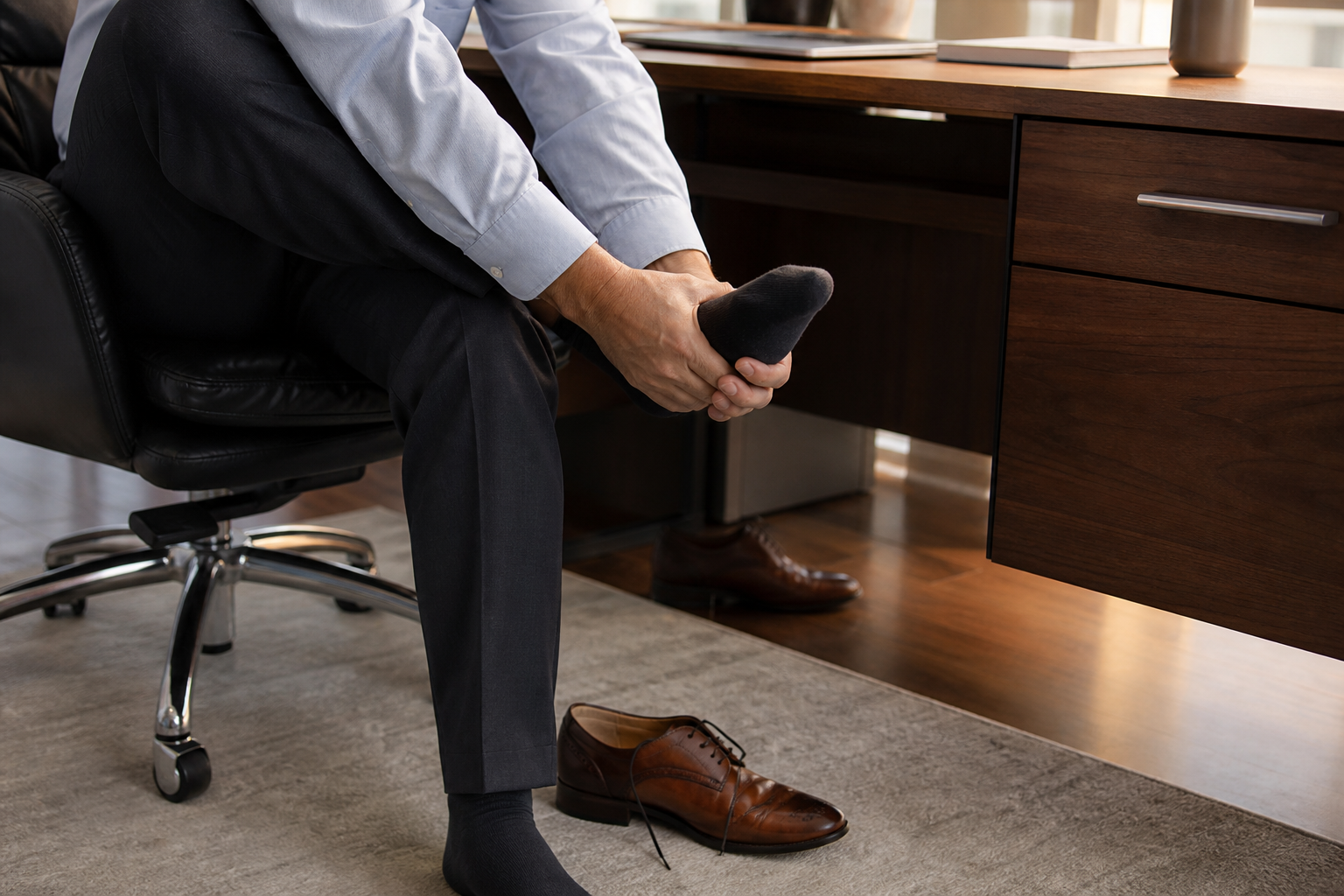
It goes like this. The shoes feel acceptable in the shop. They feel fine for the first hour or two at work. By mid-afternoon there is a hot patch across the ball of the foot or along the little toe, and by the evening you are looking forward to taking them off.
Then the shoes come off, the discomfort fades within a few minutes, and the whole thing seems unremarkable enough to repeat the next day. Repeated for years, that is how a lot of people arrive at persistent forefoot problems.
The important part is that this pattern is diagnostic. Pain that is present in the shoe and absent out of it points at the shoe.
Where the Pressure Actually Comes From
The taper in front of the toes
Traditional dress lasts narrow to a point roughly where your toes need the most room. The big toe is pushed outward, the little toe inward, and the metatarsal heads are squeezed together.
The heel raise
Even a modest heel tips body weight forward into the forefoot, increasing the pressure across exactly the part of the foot that is already crowded.
Rigid soles
A sole that does not flex where your foot flexes means every step levers across the joints rather than rolling through them.
Daytime swelling
Feet get bigger through the day. Any shoe fitted with zero spare room in the morning is a tighter shoe by the afternoon.
What Helps, and What Only Sounds Like It Helps
| Approach | Realistic effect |
|---|---|
| Buying the same shoe a size up | Adds length, not forefoot width — the foot slides forward and the toes end up in a narrower section |
| Wide-width (E / 2E) version | Helps some people; keeps the tapered shape, so side pressure often remains |
| Cushioned insole | Reduces internal volume — usually makes a tight forefoot worse |
| Spot-stretching the leather | Genuinely useful for one specific pressure point on an otherwise correct shoe |
| A foot-shaped toe box | Addresses the actual cause when the problem is toes being squeezed together |
| Fitting late in the day | Free, and eliminates the most common sizing mistake |
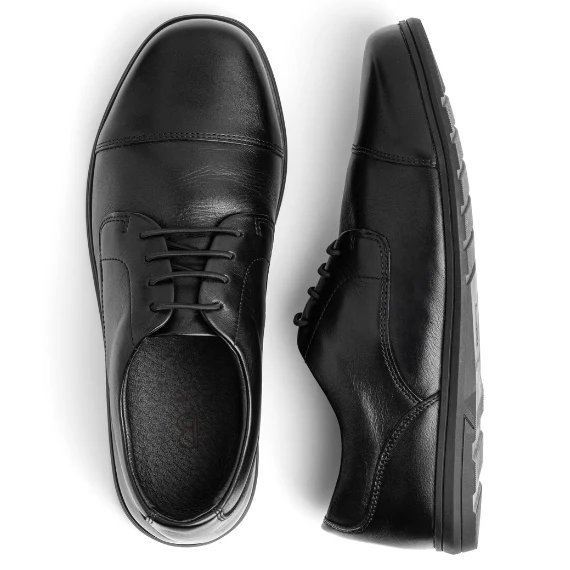
Birchbury Brenston
If the shoe has to stay formal, the constraint is appearance. The Brenston keeps an oxford upper profile while widening the forefoot and flattening the sole — the specific combination this problem calls for.
WORKING OUT WHAT YOU HAVE
Shoe Problem or Foot Problem?
Before spending money on footwear, it is worth separating the two.
Better barefoot
If walking barefoot at home is comfortable and the same distance in dress shoes is not, the shoe is the variable.
Same in every shoe
Discomfort that follows you across different shoes, including trainers and sandals, is less likely to be solved by another purchase.
Specific spot vs general ache
A precise point of pain suggests a pressure point. A diffuse ache across the forefoot after long standing suggests load and time.
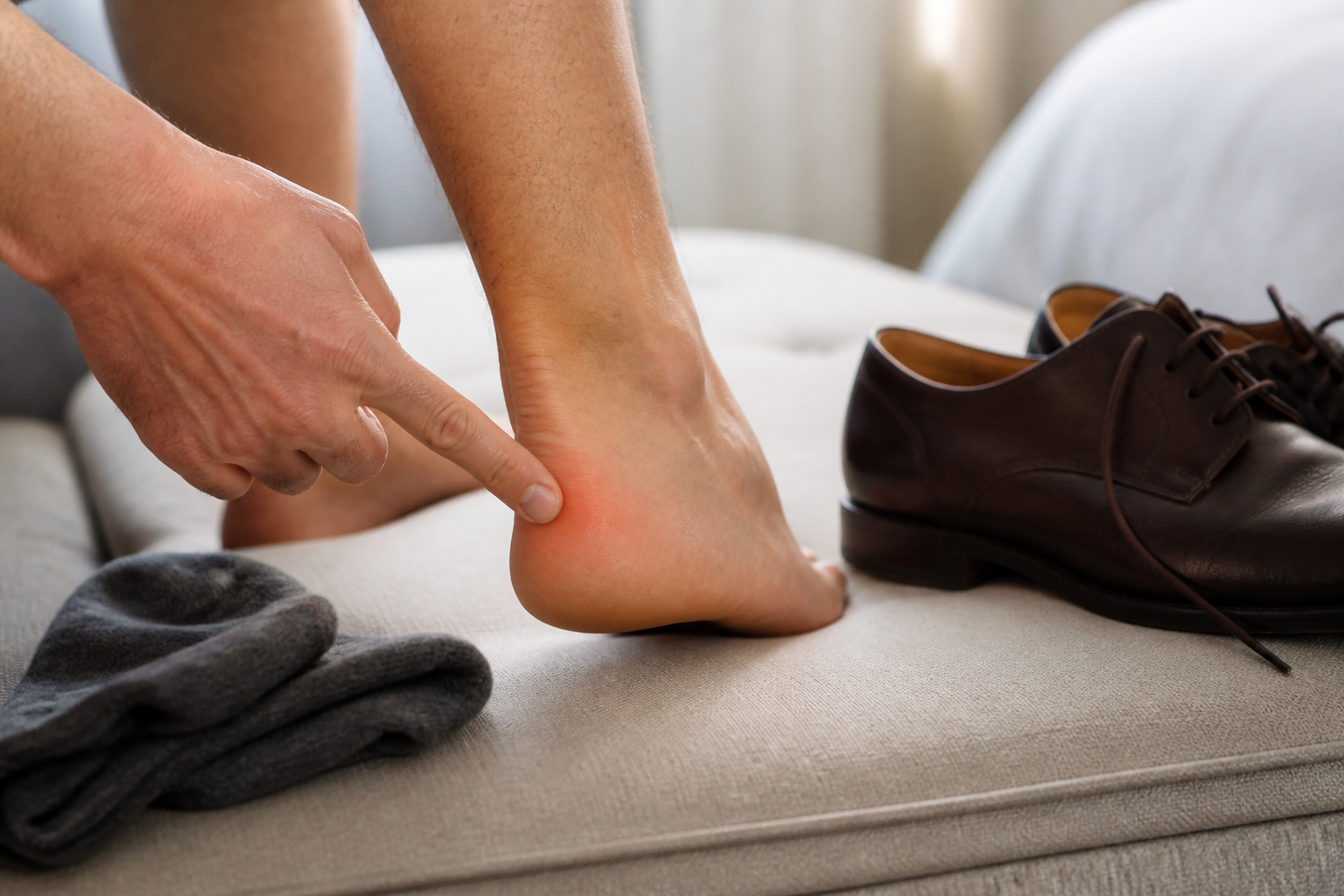
Morning heel pain
Sharp pain under the heel on the first steps of the day is a distinct pattern that is worth getting looked at rather than shopping for.
Skin changes
Calluses and corns map where pressure is concentrated. They are a fit diagnostic, not just a cosmetic issue.
One foot only
Feet are frequently different sizes. Fit the larger foot and adjust the other with sock thickness or lacing.
Book an appointment rather than buying shoes if
- Pain persists when you are not wearing shoes
- You have numbness, tingling or burning that lasts after removing them
- There is swelling, heat or redness that does not settle
- Skin is broken, or a callus is painful, discoloured or not healing
- You have diabetes, neuropathy or circulation problems in the feet
This is general footwear information, not medical advice. Persistent pain, numbness, swelling or skin changes should be assessed by a qualified clinician — especially for anyone with diabetes, neuropathy or circulation problems.
SHORT VERSION
If You Take One Thing From This
- Pain that stops when the shoes come off is a fit problem
- Length, width and toe box shape are three separate variables
- Adding insoles reduces room; it rarely fixes tightness
- Fit shoes late in the day, on the larger foot
- Breaking in softens leather — it does not reshape a narrow last
- Persistent pain, numbness or skin changes belong with a clinician
Frequently Asked Questions
Why do my dress shoes only hurt after a few hours?
Feet swell during the day. A shoe with no spare room in the forefoot at 9am can be pressing firmly by mid-afternoon. That is a fit issue, not a break-in issue.
Is the pain from the shoe or from my foot?
A useful test: if the discomfort consistently disappears within minutes of taking the shoes off and does not recur barefoot, the shoe is the main factor. Pain that persists barefoot, at rest, or overnight needs assessment.
Do dress shoes need breaking in?
Stiff leather softens with wear, which is real. But breaking in changes material, not shape or size. A shoe that is too narrow across the toes stays too narrow.
Will a cushioned insole fix a narrow dress shoe?
Usually not. Adding an insole reduces internal volume, which makes a tight forefoot tighter. If anything you may need to remove the stock insole to gain depth.
Checking the Brenston?
If the constraint is that the shoe has to look formal, the Brenston is the model built around that constraint. Check current price and sizing.
View Brenston at BirchburyWe may earn a commission if you buy through this link. Price shown was $180 at the time of writing and can change.