Testing status: this guide is written from manufacturer specifications, published sizing data and general fit principles. It is not a claim of long-term wear testing by our team.
What Is Actually Happening at the Joint
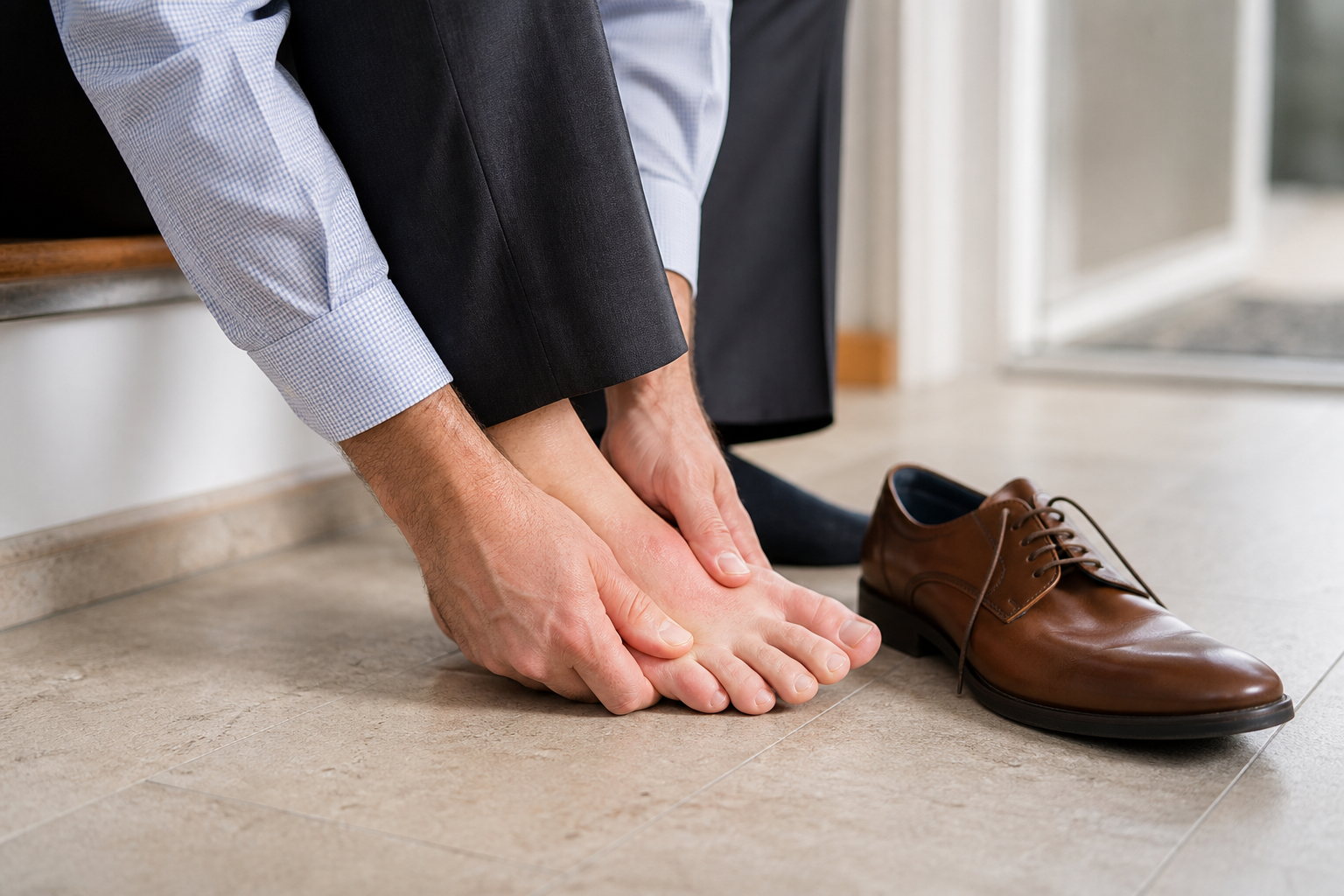
A bunion — hallux valgus — is a structural change at the joint where the big toe meets the foot. The joint drifts outward, the toe angles inward toward the others, and a bony prominence forms on the inside edge of the foot.
That prominence is the part that meets your shoe. Every time the upper presses against it, you get the familiar combination: a rubbed patch of skin, a dull ache at the joint, and toes that feel crowded by the end of the day.
This is why shoe choice matters even though shoes do not fix the underlying joint. Reducing what presses on it is a comfort intervention, and a legitimate one.
Three Things People Get Wrong
"I just need a softer shoe"
Softness helps with rubbing, but not with crowding. If the toe box narrows in front of the joint, a soft upper still stretches over the bump and still presses. Shape comes first; material second.
"I need a bigger size"
Going up a full size adds length, which lets the foot slide forward on every step and can put the joint into an even narrower part of the shoe. Length and forefoot width are separate problems.
"Stretching the leather will fix it"
Spot-stretching can relieve a specific pressure point on a shoe that is otherwise correct. It does not turn a pointed last into a foot-shaped one.
What to Look For, in Order of Importance
| Priority | Feature | Why it matters |
|---|---|---|
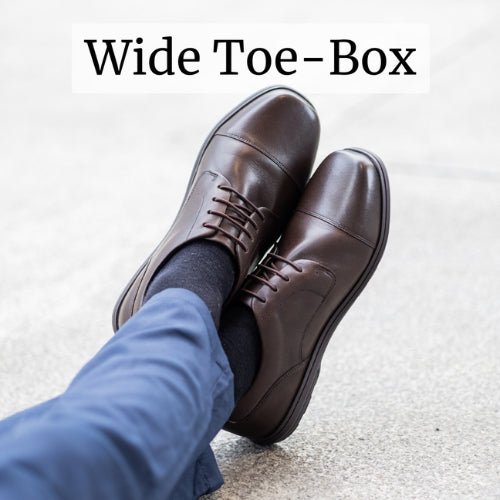
| 1 | Forefoot width and shape | Nothing should press on the prominence when standing |
| 2 | Toe box depth | Room above the toes if they are clawing or overlapping |
| 3 | Soft, seam-free upper over the joint | Seams and overlays concentrate pressure exactly where you do not want it |
| 4 | Secure heel hold | Stops the foot sliding forward into the narrowest part |
| 5 | Removable insole | Lets you add prescribed orthotics or gain depth |
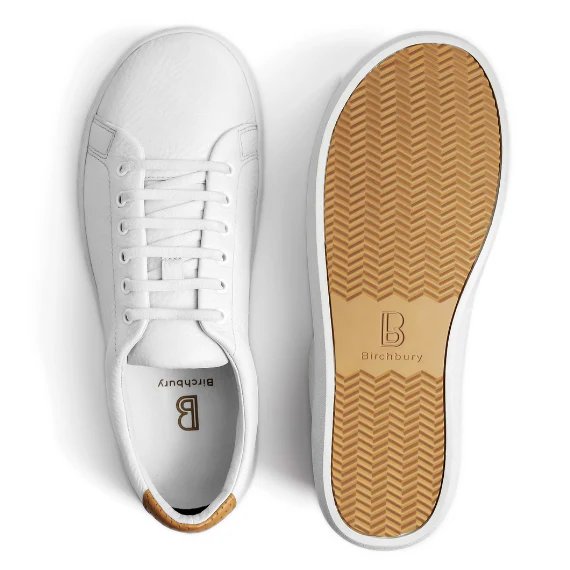
Birchbury Bramford
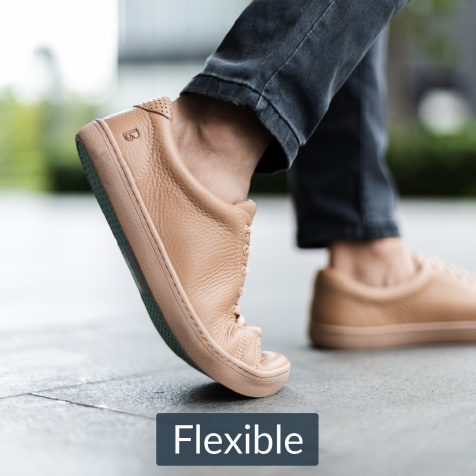
The Bramford is the softest option in the Birchbury range — a leather sneaker with a wide toe box, flexible sole and a removable insole. For pressure over the joint, a soft upper with no overlay at that point is usually more comfortable than a structured dress shoe.
Which Birchbury Model Makes Sense
All three have the same wide forefoot shape, so the choice comes down to upper stiffness and where you need to wear them.
Bramford — the softer choice
- ✓ Soft leather upper, minimal structure over the joint
- ✓ Lowest price of the three at $120
- ✓ Elastic laces reduce pressure over the instep
- — Sneaker styling, not office-formal
Brenston — when it has to be a dress shoe
- ✓ Oxford appearance with roomier forefoot
- ✓ Full-grain leather, soft out of the box per the maker
- — More structure through the upper than the Bramford
- — $180
The Carnforth chukka at $197 has more ankle coverage, which some people find helpful for stability and others find restrictive. It is the least obvious first purchase if joint pressure is the main problem.
CHECKING FIT WITH A BUNION
What to Watch in the First Week
A shoe that is right for a bunion should feel unremarkable at the joint. Not better, not worse — just absent.
No contact at the bump
Stand and press gently on the outside of the shoe over the joint. You should feel space, not your own foot immediately underneath.
Toes not overlapping
If the second toe is being pushed on top of the big toe inside the shoe, the forefoot is still too narrow.
Skin colour after removal
Take the shoe off after an hour indoors. Red marks that fade in a minute or two are normal. Marks that persist are a pressure point.
No new rubbing elsewhere
Extra room in front should not create heel slip. A shoe that rubs the heel to save the forefoot has traded one problem for another.
Orthotics in place
If you wear prescribed insoles, test with them fitted, not without. Removing the stock insole first is usually necessary.
End-of-day check
Feet swell through the day. A shoe that fits at 9am and hurts at 5pm is too tight, not "breaking in".
See a clinician rather than shopping if
- The joint is hot, very swollen or red beyond the usual prominence
- Pain wakes you at night or persists at rest
- Skin over the bump is broken, ulcerated or not healing
- You have diabetes, neuropathy or reduced circulation in the feet
- The deformity has changed noticeably in a short period
This is general footwear information, not medical advice. Persistent pain, numbness, swelling or skin changes should be assessed by a qualified clinician — especially for anyone with diabetes, neuropathy or circulation problems.
SHORT VERSION
Realistic Expectations
- Shoes reduce pressure; they do not correct the joint
- Forefoot shape matters more than softness, size or stretching
- Depth matters if the smaller toes are clawing or overlapping
- Heel hold prevents the foot sliding into the narrow part
- Prescribed orthotics need a removable insole to fit properly
- Persistent or worsening pain is a clinical question, not a shopping one
Frequently Asked Questions
Can shoes cure a bunion?
No. A bunion is a change in the structure of the joint at the base of the big toe. Footwear does not reverse it. What footwear can do is reduce pressure on the joint, which is why guidance from foot health services focuses on shoes that are wide and deep enough rather than on correction.
What shape of shoe is usually recommended?
Broadly: a shoe with enough room across the forefoot that nothing presses on the bump, a soft upper over the joint, and a fastening that holds the heel so the foot does not slide forward into the toe box. Pointed toes and rigid seams over the joint are the common aggravators.
Are barefoot-style shoes suitable if I have bunions?
They can suit some people because the toe box is shaped to allow splay, and there is no raised heel pushing the foot forward. They are not automatically suitable — a very flexible sole is not right for everyone, and anyone with diagnosed joint problems should check with a clinician first.
Should I use bunion correctors or toe spacers with roomy shoes?
Devices vary and evidence is mixed. If you use one, the shoe has to have room for it. A spacer inside an already-tight toe box makes pressure worse, not better.
Checking the Bramford?
The Bramford is the softest and least structured option in the range. Check current colours, sizes and stock directly.
View Bramford at BirchburyWe may earn a commission if you buy through this link. Price shown was $120 at the time of writing and can change.