Testing status: this guide is written from manufacturer specifications, published sizing data and general fit principles. It is not a claim of long-term wear testing by our team.
Why "Wide" Dress Shoes Often Still Hurt
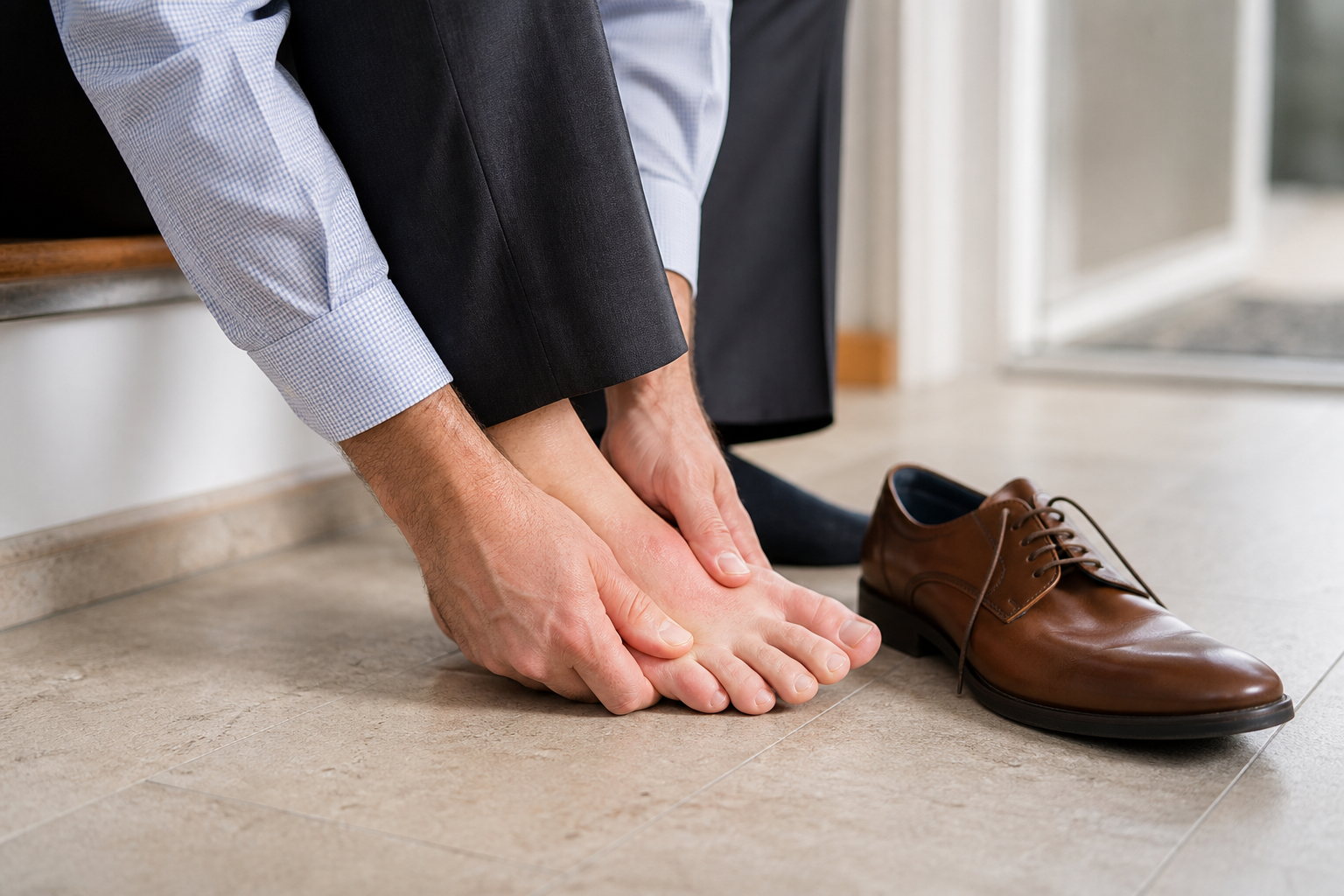
Most people who search for wide dress shoes have already tried the obvious fix: the same shoe in a wider width letter. It helped a little, then the pressure came back across the ball of the foot and along the outside of the little toe.
Width and shape are two different measurements. A 2E oxford is a wider version of a shoe that still narrows to a point in front of the toes. If your discomfort comes from your toes being squeezed toward the midline, adding width behind them does not solve it. What changes the outcome is where the widest part of the shoe sits relative to the widest part of your foot.
This guide covers what to look for, how to check fit at home, and where a wide toe box option such as Birchbury fits into the picture.
Shape, Not Just Width: Three Things That Matter
1. Toe box outline
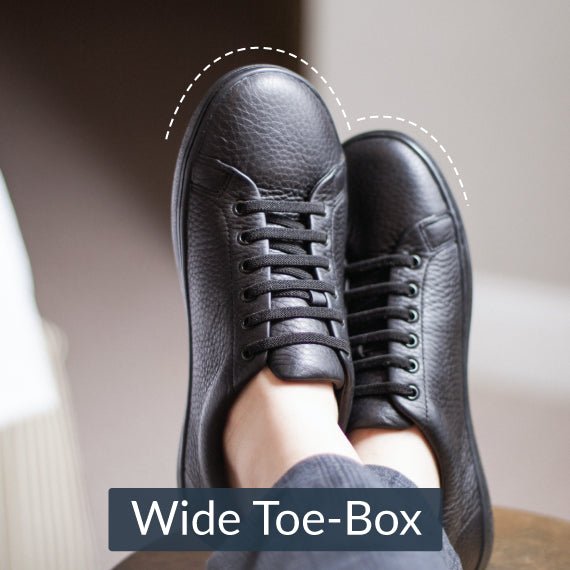
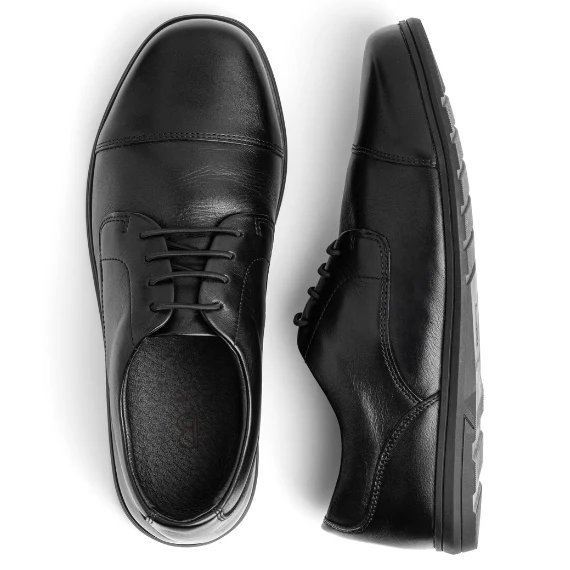
Look at the shoe from directly above. If the outline tapers to a centred point, the big toe is being pushed outward regardless of the width letter. A shape that stays broad across the front lets the toes spread under load, which is what happens when you stand barefoot.
2. Sole flexibility
A rigid sole forces the foot to work around the shoe. A sole that bends where your foot bends — at the ball, not the arch — lets the foot roll through the step instead of levering over a stiff plate.
3. Heel-to-toe drop
A raised heel shifts body weight forward into the forefoot. Zero-drop construction keeps heel and forefoot at the same height, removing that forward push. It also changes calf loading, so the transition needs to be gradual.
What Your Options Actually Are
There are three realistic routes, and they suit different people.
Route A: Wide-width mainstream brands
- ✓ Familiar styling, easy to buy locally
- ✓ Cheapest entry point
- — Same tapered shape, just wider
- — Often unavailable above 2E in dress styles
Route B: Foot-shaped brands
- ✓ Toe box shaped to the foot, not the last
- ✓ Flexible, usually zero-drop
- — Styling can read casual
- — Higher price, mostly online-only
Route C is orthopaedic or custom footwear, which is the right answer when a clinician has recommended it. This site does not cover that category.
Birchbury Brenston
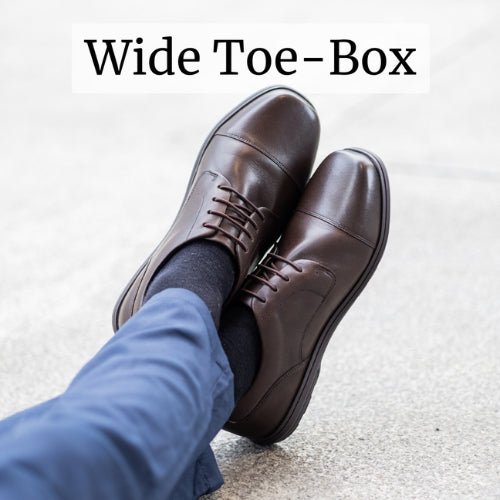
The Brenston is the model most relevant to this problem: a plain oxford silhouette with a wide toe box, flat flexible sole and full-grain leather. It is the option for someone who needs the shoe to pass in an office but cannot tolerate a tapered forefoot.
Comparing the Three Birchbury Models
All three share the same core construction — wide toe box, zero-drop sole, full-grain leather, elastic laces, removable insole. They differ in silhouette and price.
| Model | Silhouette | Best for | Price |
|---|---|---|---|
| Bramford | Leather sneaker | Smart-casual, weekends, relaxed dress codes | $120 |
| Brenston | Plain oxford | Office, business dress, formal events | $180 |
| Carnforth | Chukka boot | Colder months, smart-casual, ankle coverage | $197 |
Prices were listed at the time of writing and change with stock and promotions.
BEFORE YOU COMMIT
A Fit Check You Can Do Indoors
Ordering online only works if you check fit properly before the return window closes.
Length first
Stand up. There should be clearance in front of the longest toe — which is not always the big toe. If the toes touch the front while standing, the shoe is short, however roomy it feels sitting down.
Width at the ball
The widest part of your foot should sit at the widest part of the shoe. If it sits behind or in front of that point, the last is wrong for your foot shape.
Heel hold
Extra forefoot room should not mean heel slip. Some lift when walking is normal; sliding out of the shoe is not.
Wear the right socks
Test with the socks you will actually wear. A thick sock can remove the room you paid for.
Give it stairs
Walk on a hard indoor surface and use stairs. Flexing reveals rubbing that standing still hides.
Keep it returnable
Stay indoors and keep the packaging until you are sure. Check the merchant returns policy before ordering, not after.
Signs to stop and reassess
- Numbness, tingling or a burning line across the forefoot
- Blisters or hot spots forming within the first hour
- Pain that is still present the next morning
- Any open skin, redness that does not fade, or swelling
This is general footwear information, not medical advice. Persistent pain, numbness, swelling or skin changes should be assessed by a qualified clinician — especially for anyone with diabetes, neuropathy or circulation problems.
SHORT VERSION
Who This Category Suits
- Your forefoot pain is worse in pointed shoes and better barefoot
- You have already tried wide widths and still get side pressure
- You need something that reads as a dress shoe
- You are willing to transition gradually rather than switching overnight
- You are comfortable buying online and checking fit at home
- You do not have a condition that needs prescribed footwear
If most of those describe you, a wide toe box dress shoe is worth trying. If a clinician has recommended specific footwear, follow that advice first.
Frequently Asked Questions
Is a wide-width shoe the same as a wide toe box?
No. Width sizing such as E, EE or 2E usually widens the whole shoe, including the heel and instep, while keeping the same tapered forefoot shape. A wide toe box changes the shape of the front of the shoe so the toes can splay. Many people with forefoot pressure need shape, not just width.
Will wide toe box shoes look bulky with a suit?
It depends on the last. Sneaker-style barefoot shoes read casual. A plain oxford silhouette such as the Birchbury Brenston keeps a traditional upper profile while the internal forefoot is roomier, which is the compromise most office workers are looking for.
Do I size up in wide toe box shoes?
Not automatically. A roomier forefoot does not add length. Measure your foot length in centimetres late in the day, compare it against the merchant's own size chart, and check the return policy before ordering.
Are zero-drop shoes bad if I have worn heeled dress shoes for years?
They are not inherently bad, but the transition matters. Moving from a raised heel to a flat sole changes calf and Achilles loading. Increase wear time gradually and stop if you get persistent pain.
Checking the Brenston?
The Brenston is the closest thing in the Birchbury line to a conventional dress shoe. Check current colours, sizes and stock directly.
View Brenston at BirchburyWe may earn a commission if you buy through this link. Price shown was $180 at the time of writing and can change.